


Embryo Freezing at Vindana
More Opportunities. One Journey.
Embryo freezing — clinically referred to as embryo cryopreservation — is among the most powerful tools in modern fertility care. It allows embryos created during an IVF cycle to be preserved for use in future frozen embryo transfer (FET) cycles, giving patients additional opportunities to achieve pregnancy without undergoing repeated ovarian stimulation. At Vindana IVF and Fertility Care Hospital, embryo freezing is integrated seamlessly into our IVF programme and performed using the most advanced vitrification technology available.
How Does Embryo Freezing Work?
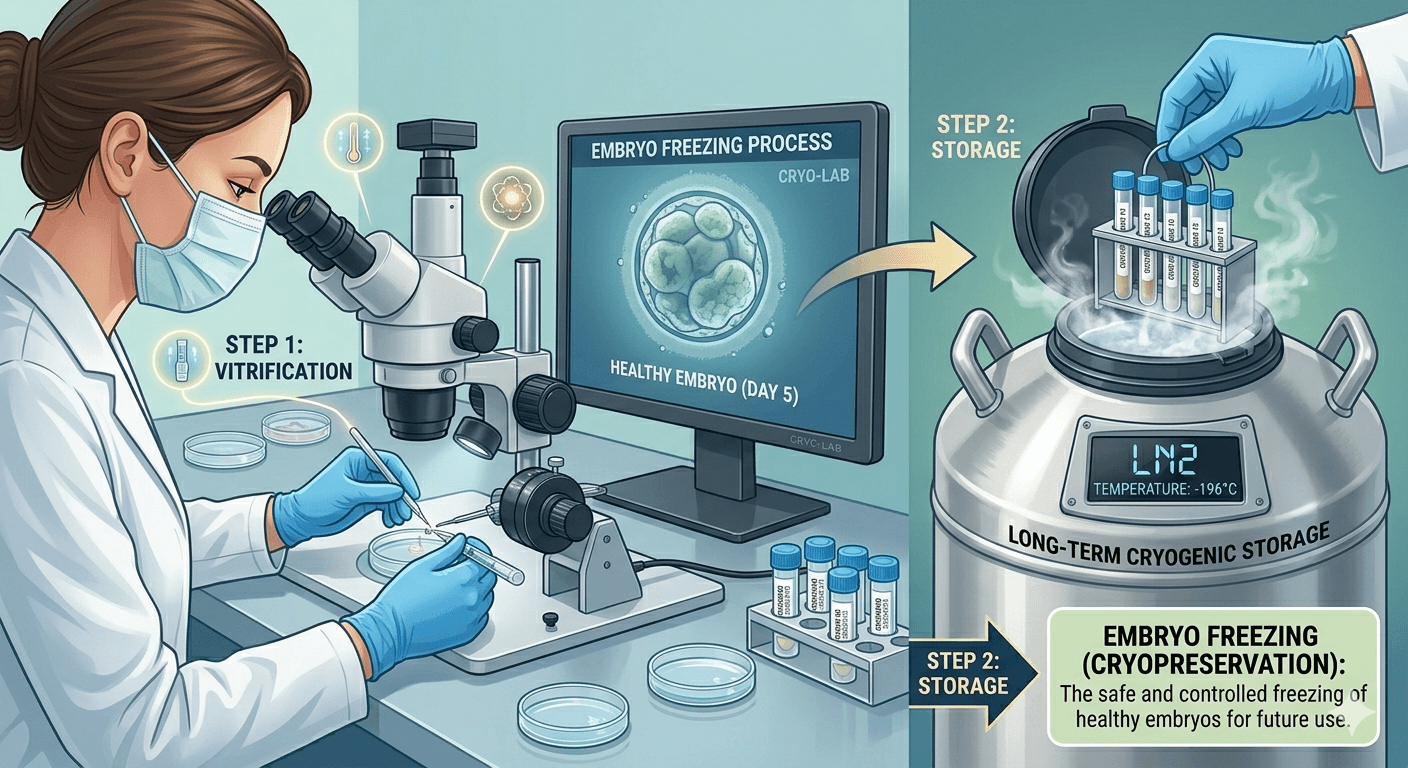
During an IVF cycle, ovarian stimulation typically results in the retrieval of multiple eggs. Following fertilisation and embryo development in our laboratory, any high-quality embryos that are not selected for immediate transfer can be vitrified — rapidly frozen — and stored for future use. Most embryos are frozen at the blastocyst stage (day 5 or 6 of development), as blastocysts have a higher implantation potential and are more easily assessed for quality.
The vitrification process used at Vindana is the gold-standard technique in embryology. By rapidly dehydrating the embryo and introducing cryoprotectants before plunging it into liquid nitrogen, vitrification prevents the formation of ice crystals that could damage cellular structures — achieving survival rates that are consistently high in experienced hands.
Why Freeze Embryos?
Embryo freezing offers significant benefits for a wide range of patients. For those undergoing their first IVF cycle, having a store of frozen embryos means that if the fresh transfer is unsuccessful, there are further embryos available for subsequent attempts — without the cost, time, or physical impact of another full stimulation cycle. For patients at risk of ovarian hyperstimulation syndrome (OHSS), a freeze-all strategy — where all embryos are frozen and transferred in a later, more controlled cycle — may also be recommended to optimise safety and outcomes.
Embryo freezing is also used in conjunction with Preimplantation Genetic Testing (PGT), where embryos are biopsied and screened for chromosomal abnormalities before transfer. This process requires embryos to be frozen while genetic results are awaited, and selected euploid (chromosomally normal) embryos are then warmed and transferred in a subsequent cycle.
What to Expect from Frozen Embryo Transfer at Vindana
When you are ready to use your frozen embryos, our team will prepare your uterine lining using either a natural or medicated cycle protocol — whichever is most appropriate for your individual situation. Your embryo will be carefully warmed, assessed for survival and quality, and transferred via a fine catheter in a procedure that is virtually identical to a fresh embryo transfer.
Frozen embryos can remain viable for many years — giving you time, flexibility, and hope for the future, whenever you are ready.
At Vindana, we support our embryo freezing patients with thorough counselling on storage, consent, and the options available to them should their circumstances change over time. We are committed to being a long-term partner in your fertility journey — not just for one cycle, but for as long as you need us.